
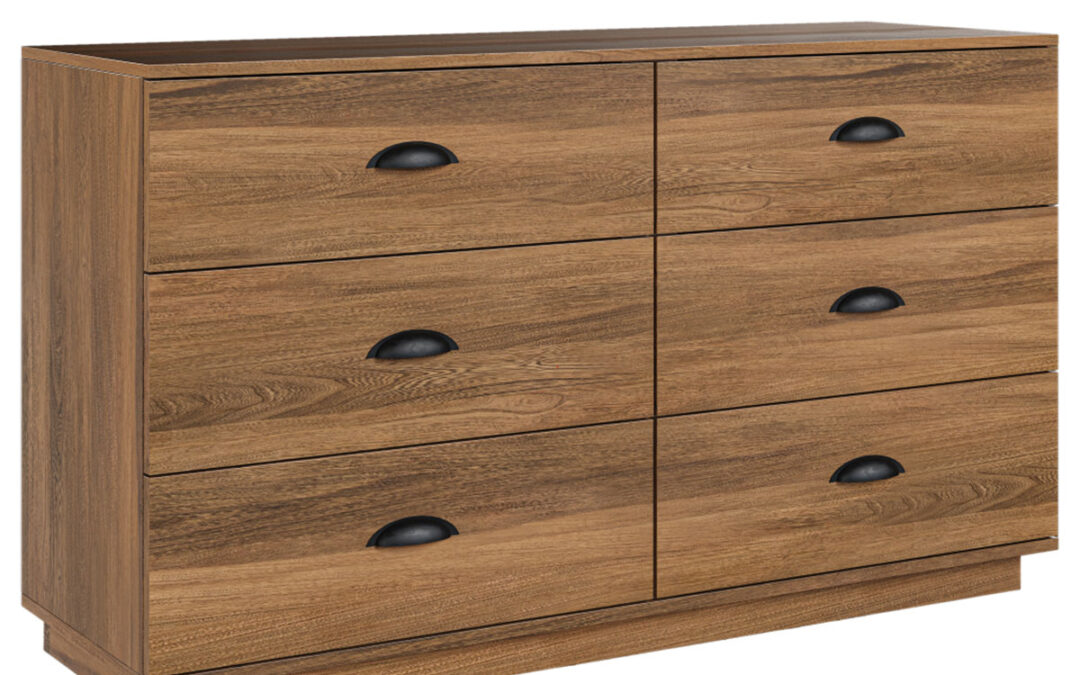
To judge furniture quality before you buy, open the drawers, examine the joints and hardware, check stability, and feel the finish. Then try the furniture as you would use it at home. Good quality comes from how those details work together—not weight, appearance, or one feature alone.
Open it
Try drawers and doors. Notice travel, alignment, and movement.
Look inside
Inspect interiors, joints, drawer bottoms, and accessible backs.
Try it
Check stability and sit in seating before deciding.
Open the drawer: five details to compare
A drawer reveals construction details that a product photo may miss. Cory’s showroom demonstration highlights full extension, finished interiors, drawer-side construction, English dovetailing, and closing hardware on the piece shown. Use these as inspection points; features vary by product.
Travel and access
Open the drawer normally. Does it move smoothly, and can you reach the storage at the back? Full-extension slides, where fitted, improve access.
Interior surfaces
Look for rough edges that could catch fabric. Cory points out the finished interior on the demonstrated drawer.
Sides and bottom
Compare the side construction and ask how the bottom is supported and attached. Thickness alone does not establish quality.
Joint fit
Look at the corners. Ask which joints connect the front and back, and inspect their fit alongside the rest of the drawer.
Alignment and hardware
Try several drawers. Check for rubbing, catching, uneven gaps, and loose pulls. Ask staff to demonstrate closing features and removal releases.
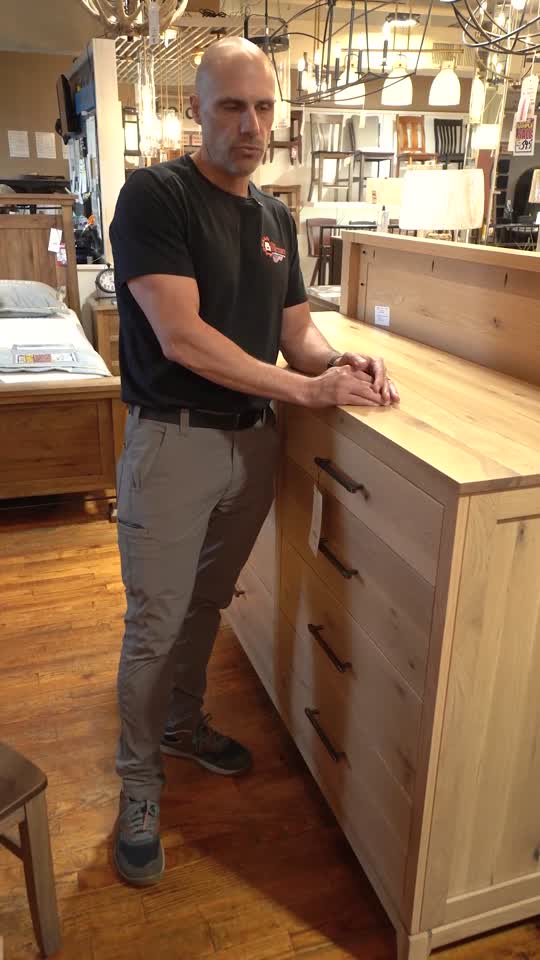
Inspect gently. Let staff demonstrate unfamiliar mechanisms. An empty drawer cannot establish performance under every load; confirm the manufacturer’s specifications for your intended use.
What dovetails and drawer hardware tell you
Dovetails use interlocking shapes to connect drawer parts. English dovetailing is one detail Cory identifies in his demonstration. Ask whether it is used at the front, back, or both. A dovetail is a useful clue, but its fit, the materials, bottom support, slides, and cabinet construction still matter.
Full extension describes how far a drawer opens. Soft-close or automatic-close describes its closing mechanism. Try the actual drawer rather than treating these features as a complete quality rating. If removal releases are fitted, ask the showroom team how they work.
For dressers, chests, and nightstands, explore our bedroom furniture and compare the construction of the specific model you like.
Look beyond the drawer front
With staff assistance, examine accessible backs, undersides, legs, and connection points. Ask how the cabinet back and shelves are attached and supported. Cory also draws attention to back construction on the case piece he demonstrates; another cabinet may be built differently.
For a chair, check the connections between the legs, seat, and back. Ask about stretchers or corner blocking where used, and check that it sits steadily on a level surface. Sit normally to assess support; never stand on furniture or use a showroom piece as a stress test.
Ask what each component is made from and feel accessible finished edges. For deeper material guidance, see Solid Wood Furniture. Confirm care requirements for the exact finish with our Furniture Care Guide.
Ask about the piece you are considering
- What materials and joints are used in the drawer, frame, and cabinet back?
- Which slides and closing features does this model use?
- How are removable drawers or adjustable components operated?
- What are the written care, warranty, and service terms?
Comfort and room fit matter too, but they are separate decisions. Our furniture-buying guide covers comfort, scale, and layout; the Dining Room Furniture page helps you compare seating options. Review available customization if changes to a particular model would help it fit your home.
Furniture-construction FAQs
Do dovetail drawers guarantee good furniture?
No. Evaluate the joint fit along with drawer materials, bottom support, slides, and cabinet construction. One feature cannot establish the quality of the whole piece.
Does soft-close mean a drawer is well made?
Soft-close is a closing feature. It does not tell you everything about the drawer’s joints, materials, support, or alignment. Inspect those details separately.
What should I check besides how smoothly a drawer moves?
Inspect the interior, corners, sides, bottom support, front alignment, and hardware. Ask staff to explain full extension and removal releases where fitted.
See the details before you decide
Visit The Factory in Wilkes-Barre or Dickson City to open drawers, inspect construction, compare finishes, and sit in the furniture. Bring your questions and room measurements. Contact the showroom first if you want to inspect a specific model.
Explore more Furniture & Lighting Guides.
